

Pussy Willow: Salix discolor
Pussy Willow, one of the first to bloom
Pussy Willow, one of the first to bloom
Pussy Willow is a highly economic and ecologically important plant. Come late winter, floral markets fill up with its stems which are adored for their almost animal like fuzzy catkins. As mammals we love the fuzz! We love furry things because their cute and they awaken our nurturing side.
Many plants produce hairs, scientifically known as trichomes. In the case of the pussy willow, one of the earliest blooming plants, these hairs serve as a form of insulation. Pussy willow grows naturally in swamps or along bodies of water where high humidity can produce lots of frost that would otherwise kill early season, unprotected flower buds.
Trichomes are found widely in the plant community. Many desert plants use them as protection from heat, while others use them to defend against insects and herbivores like deer, which dislike the feel of the hairs on their tongue and have a hard time digesting them. Some plants even snare insects with their trichomes, like the carnivorous honeydew, which secretes a thick, sticky like substance on tip of each hair, entrapping their victims.
Once the trichomes appear on pussy willows their pollen soon follows. Like red maples, this pollen plays an important role in supporting early season pollinators and since both the red maple and pussy willow enjoy wet areas, we recommend planting them together. Just keep in mind, pussy willow and most willows require full sun, so avoid tree canopies.

Pussy willow with Red Winged Black Bird
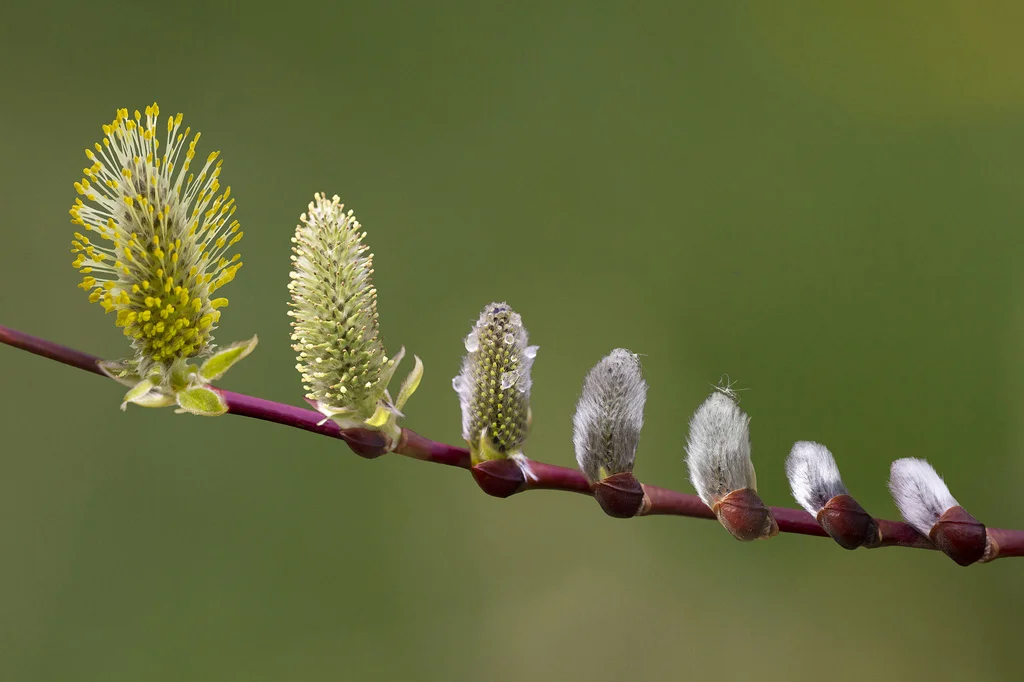
Pussy willow catkins beginning to bloom
GROWING INFO
Height: 6.00 to 12.00 feet
Spread: 6.00 to 12.00 feet
Bloom Time: March to April
Sun: Full sun
Water: Medium to wet
Growing zones: 3 to 8
ECOLOGICAL IMPORTANCE
Early flowers provide forage for pollinators
Leaves are often browsed by deer and moose
Important wetland species
Provides nesting habitat for water fowl and song birds
The willow family (Salicaceae) supports 456 verities of butterflies and months (Lepidoptera)
The number of butterflies and months the willow family supports is incredible. Here's three of our favorite!

Purple Spotted Blue butterfly

Mourning Cloak Butterfly

Viceroy Butterfly (which mimics the Monarch butterfly)

Red Maple: Acer rubra
Red Maple, an important spring blooming tree
Red Maple, an important spring blooming tree
One of the most important native trees of the eastern United States is the red maple. It can be found growing between Florida to Canada.
The red maple is a versatile tree, adaptable to dry sites but more commonly found in bottom lands, wooded areas with seasonal flooding. These are called red maple swamps.
The horticultural industry has cultivated a variety of red maples, which with consistent, high quality fall foliage, almost rivals its cousin, the sugar maple. The biggest difference between the two trees is that the sugar maple can boast a wide range of warm hues, most notability orange, while the red maple of course flaunts a streprium of red.
Most folks are not aware of this, but maple trees actually flower. Not only do they flower, but they're also some of the first trees to do so. The red maple's flowers, like its fall foliage, live up to its name, as they are red. They also play an important role for early emergent pollinators, native and nonnative. For example many honey bees will forage on this tree's flowers on sunny days between March and April.
Two months may be a long time for species of trees to flower but unlike other maples, red maples have a habit of blooming individually, at different times throughout spring.
While cold weather effects how often pollinators can feed, this tree plays an important role in providing early season energy to strengthen honey bee colonies and support native bee populations.
One of our favorite trees for its spring flowers, great fall color and benefits to pollinators, we highly recommend the red maple for any large-scale landscape.
-
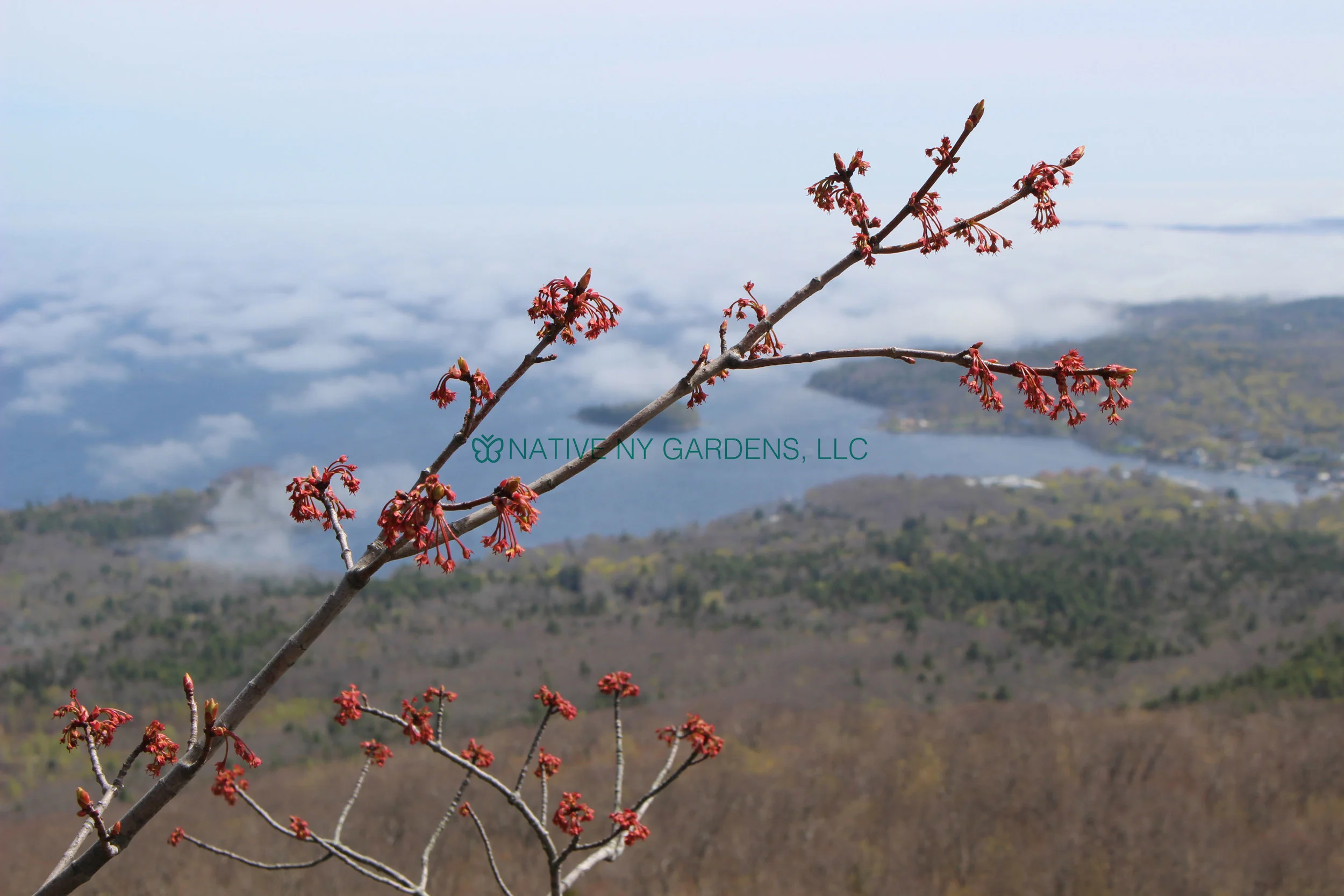
Photo by: Mackenzie Younger 'Red maple blooming on mountain in April'
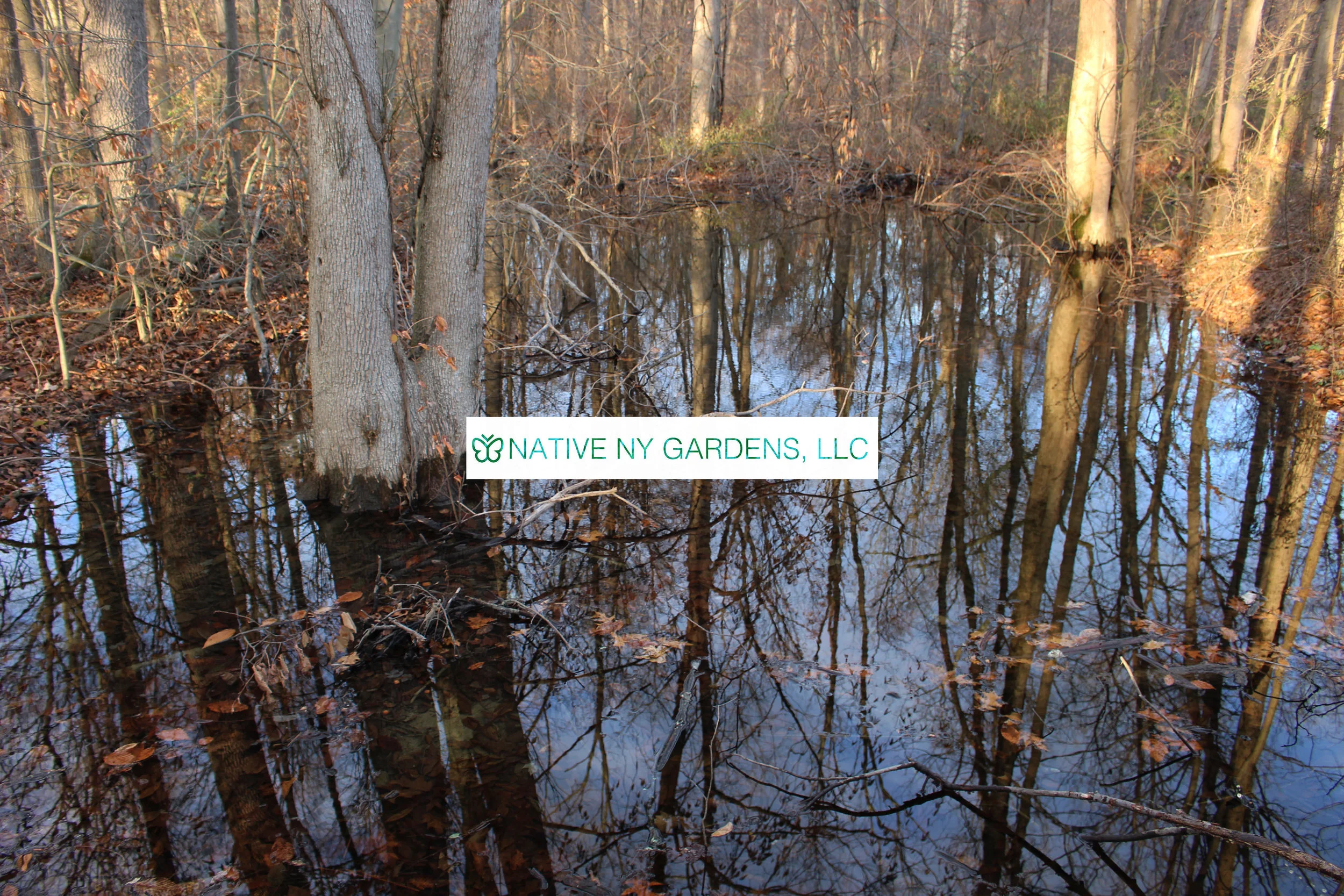
Photo by: Mackenzie Younger 'Red maple swamp, upstate New York'
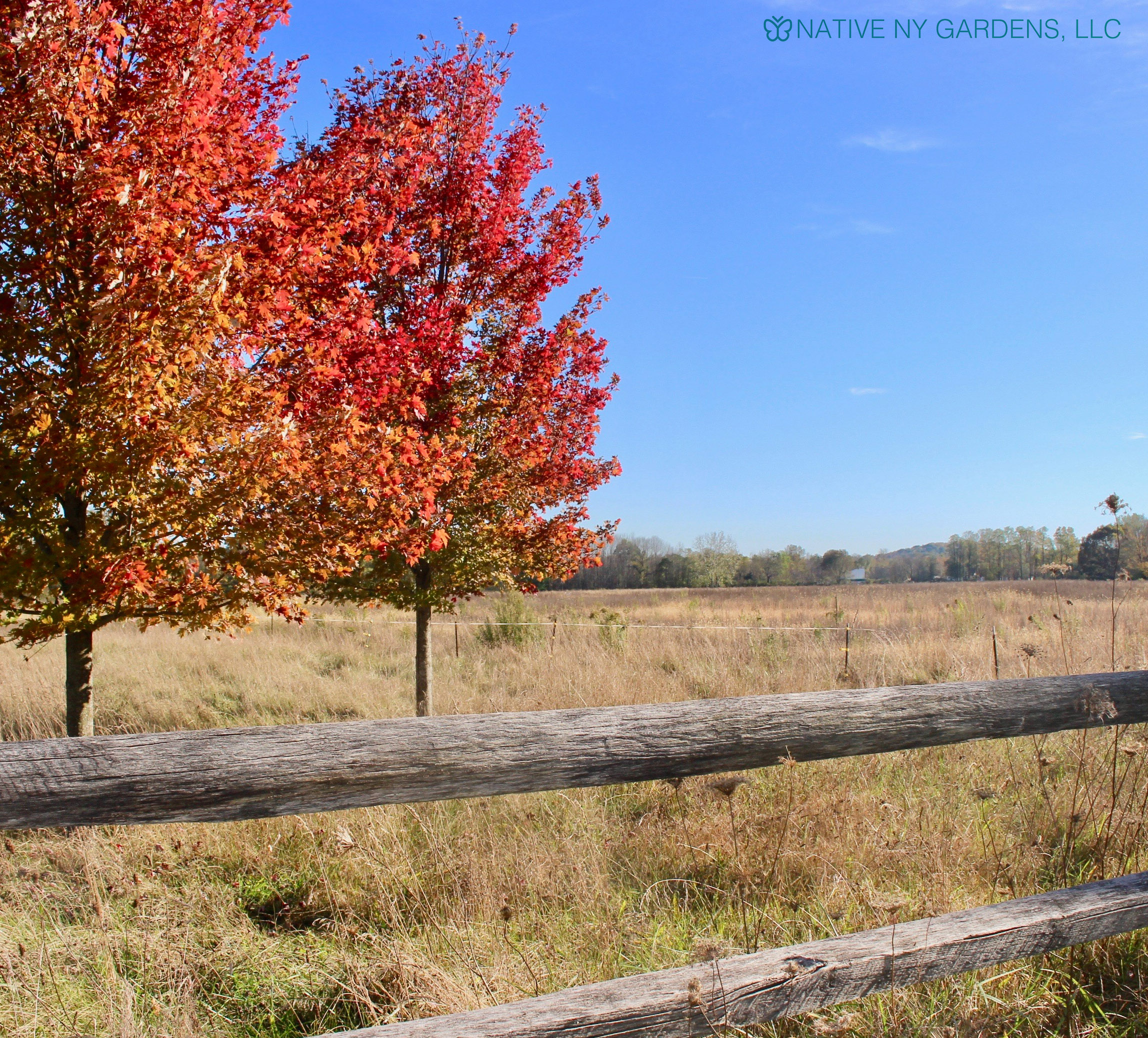
Photo by: Mackenzie Younger 'October Glory' Red maple cultivar on upstate New York farm
Growing info
Height: 40.00 to 70.00 feet
Spread: 30.00 to 50.00 feet (depends on cultivar)
Bloom Time: March to April
Sun: Full sun to part shade
Water: Medium to wet
Growing zones: 3 to 9
ECOLOGICAL Importance
Early flowers provide forage for pollinators
Leaves are often browsed by deer and moose
Seeds are eaten by birds
Red maples play an important role in supporting ephemerals pools. Ephemerals pools are seasonal, wooded ponds or puddles which many amphibians depend on for breeding. By being able to grow in temporary flooded areas, the red maple's canopy provides shade which in return prevents ephemerals pools from drying out to soon.
The maple family (Aceraceae) supports close to 288 verities of butterflies and months (Lepidoptera).